Air Fryer Teriyaki Chicken Wings

Glossy, caramelized teriyaki wings with a sweet-savory Japanese glaze that makes every bite an umami explosion — air fried to crispy perfection and lacquered in authentic homemade teriyaki sauce.
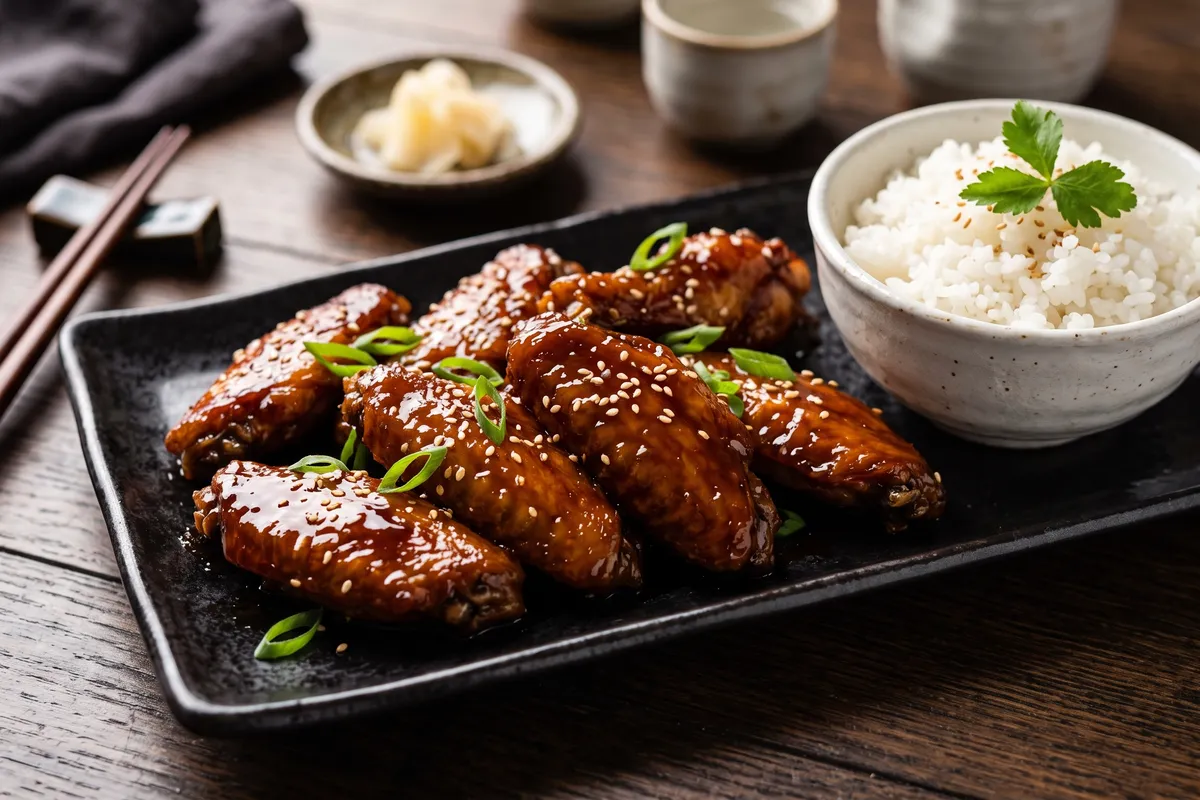
Air Fryer Teriyaki Chicken Wings
Prep Time: 10 mins
Cook Time: 28 mins
Servings: 4
Difficulty: Easy

Ingredients

  • 2 lbs Chicken wings
  • 1 tsp Baking powder
  • 0.5 tsp Kosher salt
  • 0.25 cup Japanese soy sauce
  • 0.25 cup Hon-mirin
  • 2 tbsp Sake
  • 2 tbsp Caster sugar
  • 1 tsp Fresh ginger
  • 2 cloves Garlic cloves
  • 1 tbsp Toasted sesame seeds
  • 2 stalks Green onions

Step-by-Step Instructions

  1. Step 1: Season Wings for Crispiness

    Pat wings completely dry. Toss with baking powder and salt. Air fry at 400°F for 22 minutes, flipping at 11 minutes, until deeply golden and crispy.

  2. Step 2: Make Teriyaki Sauce

    Combine soy sauce, mirin, sake, sugar, ginger, and garlic in a saucepan. Simmer 8–10 minutes until thickened. Should coat a spoon thickly.

  3. Step 3: First Glaze Coat

    Brush wings with thin coat of teriyaki. Return to air fryer at 380°F for 3 minutes. Remove and rest 2 minutes.

  4. Step 4: Second Glaze Coat

    Apply second thin coat of teriyaki. Return to air fryer at 380°F for 3 minutes until sauce caramelizes into a deep, shiny lacquer.

  5. Step 5: Final Brush & Garnish

    Remove from air fryer. Immediately brush with final gloss coat. Transfer to serving plate. Garnish with sesame seeds and green onions. Serve with steamed rice.

Ingredient Substitutions & Expert Guide

## The True Meaning of Teriyaki In Western countries, "teriyaki" has become a generic term for anything sweet and soy-flavored. But in Japan, **teriyaki (照り焼き)** is a precise cooking method, not just a sauce. The word breaks down into: - **teri (照り)** — the lustrous shine and glaze created by caramelized soy sauce and mirin on the surface of grilled protein - **yaki (焼き)** — the act of grilling or broiling over direct heat Authentic Japanese teriyaki is characterized by this luminous, lacquered appearance — a result of sugars in mirin and sake caramelizing onto the protein in thin, successive layers. Our air fryer method replicates this effect with remarkable fidelity. --- ### The Four Pillars of Authentic Teriyaki Sauce Traditional Japanese teriyaki sauce contains exactly four ingredients. Everything else is a Western modification: **1. Soy Sauce (醤油 — Shoyu)**: The fermented umami backbone. Use Japanese-style soy sauce (Kikkoman or Yamasa) rather than Chinese soy sauce — Japanese soy is brighter, more nuanced, and less salty. For a gluten-free version, use tamari. **2. Mirin (みりん)**: Japanese sweet rice wine with 14% alcohol and approximately 45% sugar content. It is the primary source of the characteristic glaze sheen and caramelized sweetness. Do not substitute corn syrup — it lacks mirin's complex flavor compounds. Look for **hon-mirin** (true mirin) rather than **mirin-style condiment** (artificial). **3. Sake (酒)**: Japanese rice wine that tenderizes proteins and eliminates "gamey" animal odors through its alcohol content, which evaporates during cooking. Cooking sake (料理酒) is inexpensive and works perfectly. **4. Sugar**: A small amount of caster sugar amplifies sweetness and caramelization beyond what mirin alone provides. **The Classic Formula (makes enough for 2 lbs wings):** - ¼ cup soy sauce - ¼ cup hon-mirin - 2 tbsp sake - 2 tbsp caster sugar - 1 tsp fresh ginger, grated - 2 garlic cloves, minced Combine and simmer over medium heat for 8–10 minutes until reduced by one-third and the sauce coats a spoon in a thick, glossy ribbon. --- ### Why Air Fryer Teriyaki Wings Outperform Grilled Traditional teriyaki requires constant attention over a charcoal grill — the high sugar content of teriyaki sauce burns instantly if unattended. The air fryer solves this with controlled, consistent heat that caramelizes the glaze evenly without burning. **The Air Fryer Lacquering Technique:** 1. Cook wings completely DRY at 400°F for 22 minutes (maximum crispiness base) 2. Apply thin first coat of teriyaki → 3 minutes at 380°F (sets the first caramel layer) 3. Rest 2 minutes (sauce firms up) 4. Apply second thin coat → 3 minutes at 380°F (deepens the lacquer) 5. Brush final gloss coat immediately after removing from air fryer Each coat must be **thin** — thick single coats drip off and burn on the basket. Thin multiple coats build the characteristic teriyaki lacquer. --- ### Sesame Seeds & Garnish: Essential Finishing Touches The finishing garnish is not decorative — it is structural to the teriyaki experience: - **Toasted white sesame seeds**: Add nutty crunch and visual contrast against the dark glaze - **Toasted black sesame seeds**: Provides visual drama and subtle bitter complexity - **Thinly sliced green onion**: Bright, fresh allium note that cuts through the sweetness - **Pickled ginger slices**: Cool, refreshing palate cleanser between bites --- ### Serving Teriyaki Wings the Japanese Way - On a rectangular black plate or wooden board for dramatic visual presentation - Accompanied by steamed Japanese short-grain rice - With a small bowl of extra teriyaki sauce for dipping - Alongside a simple cucumber salad dressed with rice vinegar, sesame oil, and toasted sesame seeds The combination of the glossy, caramelized wings and pristine white rice is one of the most visually elegant and gastronomically satisfying pairings in all of Asian cuisine.

Frequently Asked Questions

How long do I cook Air Fryer Teriyaki Chicken Wings in the air fryer?

Cook for approximately 28 minutes at the recommended temperature, flipping halfway for maximum crispiness.

What is the preparation time for Air Fryer Teriyaki Chicken Wings?

Prep time takes about 10 minutes to season and prepare before air frying.

How many servings does this Air Fryer Teriyaki Chicken Wings yield?

This recipe makes 4 standard servings. You can adjust the portions using the interactive servings scaler on our recipe card.

What is the secret chef tip for the best Air Fryer Teriyaki Chicken Wings?

Use hon-mirin (true mirin), not mirin-style condiment — the flavor difference is enormous.